
Yalla Ludo - Ludo&Jackaroo
Aviva SunBoard
4.314.77K Reviews
- Version
- 1.5.2.0
- Installs
- 100.00M
- Age Rating
- Everyone
Screenshots




Our Review of Yalla Ludo - Ludo&Jackaroo
 Analysis by Appyee
I like board games that make it easy to turn a spare moment into a proper little contest, and Yalla Ludo has a clear appeal for that. It brings familiar Ludo play to a phone while also offering Jackaroo, which gives the experience a more tactical alternative. The mix suits people who enjoy playing with friends as much as those who simply want a casual match, though the social side can be less appealing if you prefer quiet, self-contained games.
What the two games ask of you
Ludo is the obvious starting point: its rules are familiar to many players, and the basic attraction is the changing fortune of each turn. Jackaroo takes a different kind of attention. In my experience, it rewards thinking ahead more than simply reacting to a roll, so switching between the two keeps the app from feeling like one board repeated with a new skin. If you are choosing between them, I’d start with Ludo for a relaxed introduction and move to Jackaroo when you want a more deliberate challenge.
That distinction matters when deciding whether this is a good fit. Players looking for a quick, recognizable game can settle into Ludo, while people who enjoy planning and coordinating with teammates may find more to chew on in Jackaroo. Neither choice makes the other obsolete; they serve different moods. I wouldn’t pick the app expecting a deep strategy game in every match, but the contrast between a familiar race and a more considered board game gives repeat visits some variety.
Rediscovering Classic Games
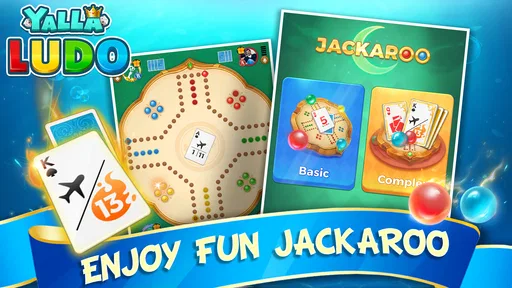
The first thing that struck me about Yalla Ludo - Ludo&Jackaroo is how it beautifully blends traditional board game elements with the convenience of modern technology. The app offers two main games: Ludo, which most of us are familiar with, and Jackaroo, which was a delightful new discovery for me. If you’re not familiar with Jackaroo, it’s a strategic game that requires a bit more planning and cunning than Ludo, adding a new layer of fun.
Easy Navigation and User Interface
One of the first things I noticed when I opened the app was how clean and intuitive the interface is. It’s super easy to navigate, even for someone who might not be as tech-savvy. The menus are straightforward, and the game boards are vibrant and engaging without being overwhelming. Honestly, it feels like the developers really put themselves in the shoes of the users.
The uncomplicated presentation is particularly useful when you are introducing the game to someone who is used to playing on a physical board. There is less to explain before the first match: you can focus on the rules and the people around the game rather than asking everyone to work out a complicated interface. For a family call or a casual get-together, that low setup effort is a genuine advantage. I’d still recommend checking which game everyone wants before starting, since a familiar Ludo match and a Jackaroo session call for different expectations.
Multiplayer Madness
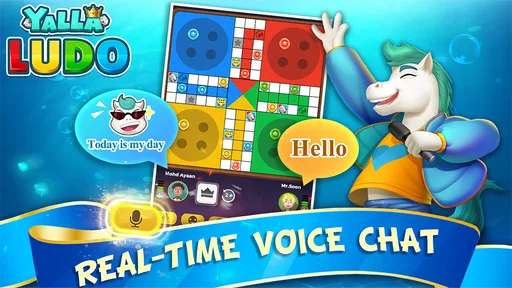
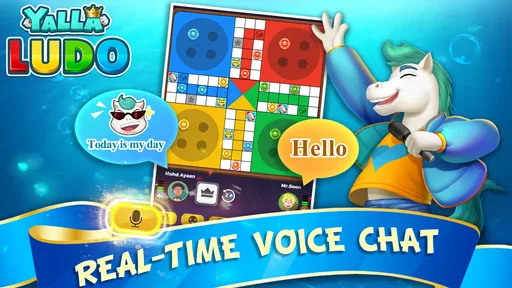
What’s a board game without some friendly competition, right? Yalla Ludo offers both local and online multiplayer options, which is fantastic. You can play with your friends in the same room or connect with players from around the world. The online community is vibrant and active, and I found myself quickly getting into matches. There’s even a voice chat feature, so you can trash talk or strategize with your teammates in real-time. It’s like being in the same room with friends, even if you’re miles apart.
A realistic use for the online option is a group of friends who want to keep a familiar game going when they cannot meet in person. Voice chat can make a team game feel more companionable, but it also changes the tone: conversation is part of the session, not an optional extra you can ignore if you want a completely silent experience. I’d use it when I know the other players and want to coordinate or joke around. If I were playing in a shared space, commuting, or looking for a quiet break, I would keep the social expectation in mind before choosing an online room.
Local play and online matchmaking solve different problems. Playing together in person keeps the usual face-to-face banter, while online play removes the need for everyone to be in the same place. Compared with a standalone digital board game, the social tools are a real point of difference; compared with a physical board, the phone makes arranging a match easier but cannot reproduce the same shared tabletop atmosphere. If the people you want to play with are available, the local option is likely the warmer choice. If schedules or distance get in the way, online play is the practical alternative.
Customization and Rewards
I was pleasantly surprised by the level of customization available in the app. You can choose different themes and styles for your game pieces and boards, making each game feel fresh and unique. Plus, there are rewards and incentives to keep you coming back. You earn coins by winning games, which you can use to unlock new features and items. It’s a nice little motivator to keep playing and improving your skills.
The reward loop works best as a side benefit rather than the reason to play. Winning can make the next unlock feel earned, but it also means progress is tied to match results, so a run of losses may feel slower than a player hopes. I’d treat cosmetic choices as a way to make sessions feel personal, not as a measure of skill or a requirement for enjoying the board. If you find yourself playing only to chase the next reward, it may be worth switching games or taking a break; the core appeal is still the match itself.
There is also a spending consideration. The game is free to start, while optional in-app purchases range from $0.99 to $299.99 per item. That broad range makes it sensible to decide on a personal limit before browsing purchase options, especially if you are sharing a device with a younger player. I would not treat paid items as necessary to learn the games or enjoy a casual session. A teen content rating is another reason for parents to look at the social environment and spending controls on the device, rather than assuming that a board-game format alone settles whether it is suitable for every household.
Learning Curve and Challenges
If you’re new to these games, no worries! The app offers a tutorial that’s easy to follow, and there are different difficulty levels to challenge both newbies and seasoned players. I found the AI challenging enough to keep me on my toes but not so difficult that it became frustrating. It’s a perfect balance that keeps the game interesting.
For a new player, I’d use the tutorial as a low-pressure first step, then try a practice match before joining a competitive online session. That gives you room to learn the turn flow without also having to keep up with strangers’ conversation or decisions. A useful trade-off is that playing against AI can help you get comfortable with the rules, while human opponents bring the unpredictability and social energy that make multiplayer different. If you already know Ludo, don’t assume that knowledge automatically prepares you for Jackaroo; give its more strategic decisions time to make sense.
The challenge also depends on what you want from a board game. Someone who likes familiar rules and light rivalry may prefer Ludo, whereas a player who enjoys weighing choices may be more engaged by Jackaroo. The app’s different difficulty options make it easier to find a starting point, but no single setting can make every match equally enjoyable for a group with mixed experience. When introducing it to friends, I’d begin with the simpler shared expectations and move up in challenge only once everyone is comfortable.
Community and Interaction
Another thing that stands out about Yalla Ludo is the sense of community. There are daily challenges and tournaments that you can participate in, which is a great way to test your skills against other players. The app also has a social feature where you can add friends and keep track of your progress together. It’s nice to feel part of a community where you can share tips, strategies, or just some good old-fashioned banter.
These activities give a player more structure than simply opening the app and choosing a board. A daily challenge can be a small reason to return, while tournaments suit people who enjoy a more focused contest. The flip side is that recurring prompts and social activity can make a casual game feel like another obligation if you already have too many things competing for your attention. I’d treat those options as invitations, not a checklist. You can enjoy a regular match without turning every session into a pursuit of ongoing progress.
The social layer is also where personal preference matters most. Adding friends and following progress can be motivating if you have a regular group, but players who want a private, offline-feeling pastime may prefer a simpler board-game app without chat or community features. Yalla Ludo is strongest when the social elements support the reason you opened it: sharing a match, learning from others, or keeping up friendly rivalry. They are less of a benefit if you would rather avoid voice interaction or competition with unfamiliar players.
How it fits a spare moment
For an everyday example, imagine waiting for a friend who is running late. A quick Ludo session can fill the gap without requiring a long setup or a new hobby to learn. If the wait turns into a planned evening with a group, switching to Jackaroo offers a more involved option, particularly for players who want to talk through strategy. That flexibility is more useful than having many modes that all feel alike: the two games can match different amounts of attention and different company.
I would be more cautious about opening it when I only have a minute or two and cannot comfortably stay focused. A board-game match is built around taking turns, and online play can involve other people’s time as well as your own. It suits a proper break better than a moment when you may have to put your phone away without warning. For very short interruptions, a solo puzzle or a game designed around brief stages may be a better choice.
Who should choose it—and who may prefer another game
I’d recommend it to people who already enjoy Ludo, want to play with friends or family remotely, or are curious about trying Jackaroo alongside a familiar classic. It is also a sensible pick for someone who values social play and wants both local and online ways to get a match going. The developer is Aviva Sun, and the game is free to download; I’d still keep the optional purchase range in mind when deciding whether it is a comfortable fit for your household.
On the other hand, I would steer away from it if you want a purely solo experience, dislike voice chat and social competition, or prefer a game with no purchase prompts or ongoing reward chase. A physical board is still better when everyone is together and the point is to share a screen-free evening. For people who want a more demanding strategy experience, a dedicated strategy board game may offer more depth than this mix of accessible Ludo and Jackaroo. The right alternative depends on whether you value convenience, social contact, or more complex play most.
Its popularity suggests that plenty of players have found a reason to keep coming back: it has a 4.3 average from around 1.2 million ratings and over 100 million installs. Those figures do not tell me whether a particular group will enjoy the chat or the pacing, but they do show that this is a well-established option rather than a niche board-game experiment. I’d judge it by the match style you want, not by popularity alone.
Final Thoughts
In a world where we’re always on the go, having a game like Yalla Ludo - Ludo&Jackaroo on your phone is a real treat. It’s easy to pick up and play, whether you have just a few minutes or a whole afternoon to spare. The combination of classic gameplay, modern technology, and a strong sense of community makes this app a must-try for anyone who loves board games. I’ve thoroughly enjoyed my time with it, and I’m sure many of you will too.
So, if you’re looking for a fun, engaging, and nostalgic gaming experience, give it a download. Who knows, you might just find yourself hooked!
My verdict on its staying power
The progression is most convincing when it gives a session a gentle next step: learn the rules, improve through play, try a tougher match, or take part in a community activity. The rewards and challenges can help keep that rhythm alive, but they are not a substitute for enjoying the actual board games. I see the app’s best long-term quality as the choice between familiar Ludo and more thoughtful Jackaroo, with multiplayer adding a reason to return when friends are available.
The game is free, carries a Teen age rating, and its current version is 1.4.9.1; it runs on Android 5.0 and later. It was released on September 20, 2018, and has around 14,000 written reviews. Those practical details make it easy to assess whether it fits a device and audience, while the main decision remains personal: whether you want a social board-game space or a quieter, more self-contained pastime. I’d give it a try if the first description sounds like your kind of evening, but I wouldn’t force it into a routine just to keep up with unlocks.
Privacy and Permissions
See what permissions an app requests and how it handles your data.
- Device & app history
- retrieve running apps
- Phone
- read phone status and identity
- Photos/Media/Files
- read the contents of your USB storage, modify or delete the contents of your USB storage
- Storage
- read the contents of your USB storage, modify or delete the contents of your USB storage
- Camera
- take pictures and videos
- Microphone
- record audio
- Wi-Fi connection information
- view Wi-Fi connections
- Device ID & call information
- read phone status and identity
- Other
- view network connections, pair with Bluetooth devices, full network access, close other apps, change your audio settings, run at startup, draw over other apps, control vibration, prevent device from sleeping
Verdict
Strengths of Yalla Ludo - Ludo&Jackaroo
- User-friendly interface enhances gameplay.
- Smooth multiplayer connectivity.
- Variety of game modes available.
- Engaging daily rewards system.
- Customizable avatars for personalization.
Limitations of Yalla Ludo - Ludo&Jackaroo
- Frequent ads can interrupt play.
- Limited free game currency.
- Some features require in-app purchases.
- Occasional connectivity issues.
- No offline mode available.
Similar Picks in This Category
View All
Ludo King®
Gametion4.1

Ludo
Yarsa Games4.6

Tile Master® - Matching Game
Higgs Studio3.6

Checkers Online
CC Games4.6

Dominoes
Loop Games4.7

Chess
Chess Prince4.6
Frequently Asked Questions
What is Yalla Ludo - Ludo&Jackaroo?
Yalla Ludo - Ludo&Jackaroo is a mobile app that offers an engaging and interactive way to play the classic board games Ludo and Jackaroo. Available on both Android and iOS, it combines traditional gameplay with modern features, including online multiplayer modes and voice chat, to enhance the gaming experience.
How can I play with friends on Yalla Ludo?
To play with friends on Yalla Ludo, simply create a room in the app and invite them using a unique room code. This feature allows you to enjoy real-time games with friends regardless of their location. You can also add friends to your list for quick access to future games.
What are the main features of Yalla Ludo?
Yalla Ludo offers several features, including online multiplayer modes, a variety of Ludo and Jackaroo game modes, voice chat, and friend lists. The app also includes customizable game settings and a ranking system to challenge players to improve their skills and compete globally.
Is Yalla Ludo free to download and use?
Yes, Yalla Ludo is free to download and use. However, it may offer in-app purchases for additional features, such as exclusive avatars or special game modes. These purchases are optional and not necessary for enjoying the core gameplay experience.
Does Yalla Ludo require an internet connection?
Yalla Ludo requires an internet connection for online multiplayer modes and voice chat features. However, the app also offers offline modes where you can play against AI opponents, making it accessible even when you're not connected to the internet.
Play our best games!


